Ups and Downs in Latin American Democratization: Elections, Legitimacy and Democratic Resilience (2020–2025)
By Dayana León
Executive Summary
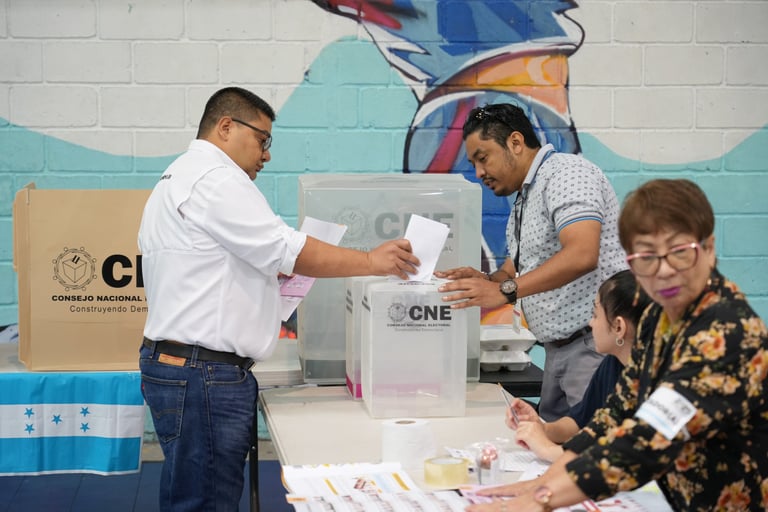
This policy brief examines the trajectory of democratization in Latin America and the Caribbean between 2020 and 2025, a period defined by a profound structural paradox: the continued holding of regular and competitive elections coexists with a sustained erosion of democratic legitimacy, declining institutional trust, and weakening state capacity to guarantee rights, security, and shared rules. Rather than experiencing abrupt authoritarian breakdowns, the region is undergoing processes of gradual democratic hollowing, in which electoral democracy formally persists while its substantive foundations are increasingly strained.
Drawing on comparative evidence from V-Dem, International IDEA, Latinobarómetro, LAPOP, and electoral observation missions conducted by the OAS and the European Union, the brief identifies a pattern of incremental autocratization characterized by disruptive institutional reforms, extreme political polarization, judicialization of politics, systematic disinformation, criminal infiltration of political systems, and a growing unwillingness to accept electoral defeat. These dynamics do not eliminate elections, but progressively weaken checks and balances, political representation, social cohesion, and public confidence in democratic governance.
The brief argues that democracy in Latin America and the Caribbean has neither collapsed nor consolidated. Instead, it has entered a prolonged phase of fragile resilience, in which normative support for democracy remains significant—and has even increased in recent years—while trust in institutions, political parties, and state authority continues to erode. Elections remain the primary mechanism of political competition, but their capacity to generate legitimacy, accountability, and collective trust is increasingly contested.